


Berlin, 28 September 2026 | The hydrogen infrastructure alliance (H2IA), an international alliance of hydrogen refuelling station operators, is actively fostering concrete conversations with various OEMs about the rollout of hydrogen trucks in Europe, after a successful kick-off since the creation of the alliance.
By connecting OEM rollout plans with the existing and planned refuelling networks of its members, H2IA aims to accelerate hydrogen mobility through better alignment of vehicles, infrastructure, locations and deployment timelines at European scale. The objective is straightforward: hydrogen trucks need access to reliable refuelling infrastructure, while stations need sufficient vehicle volumes to operate economically. H2IA’s “Connecting the Dots” approach is designed to help bring both sides together.
Visible results
The energy transition is no longer a discussion between ‘left’ or ‘right’. Besides climate change, energy security—from geopolitics to grid congestion—and a ‘competitive price at the pump’ are the key drivers for hydrogen in addition to battery-electric. The operators from the H2IA commercially deploy trucks around their stations network.
Acceleration
The IAA Transportation in Hanover featured multiple new announcements about hydrogen. Companies such as MAN and Hyundai already deploy hydrogen trucks in commercial fleets. Announcements surrounding the IAA Transportation show that Scania, Iveco, Volvo and Daimler are now also entering the hydrogen truck market with new vehicle models, pilots and/or preseries.
The increasing presence of international manufacturers at the IAA Transportation, including Chinese such as Dongfeng and Foton, confirms that hydrogen trucking is becoming a global market opportunity. Coordinated deployment of vehicles and infrastructure will be important for Europe to maintain a competitive position.
For H2IA, the next step is therefore not simply to develop more stations or wait for additional vehicles to enter the market. It is to connect the two deployment strategies.
Through direct dialogue with OEMs, H2IA seeks to identify where expected vehicle volumes can be matched with existing or planned refuelling capacity, where infrastructure gaps remain, and where cross-border hydrogen mobility corridors can progressively emerge. More vehicle models, combined with greater network coverage and coordinated deployment, can generate the scale required to improve station utilization and strengthen the business case for both hydrogen trucks and infrastructure.
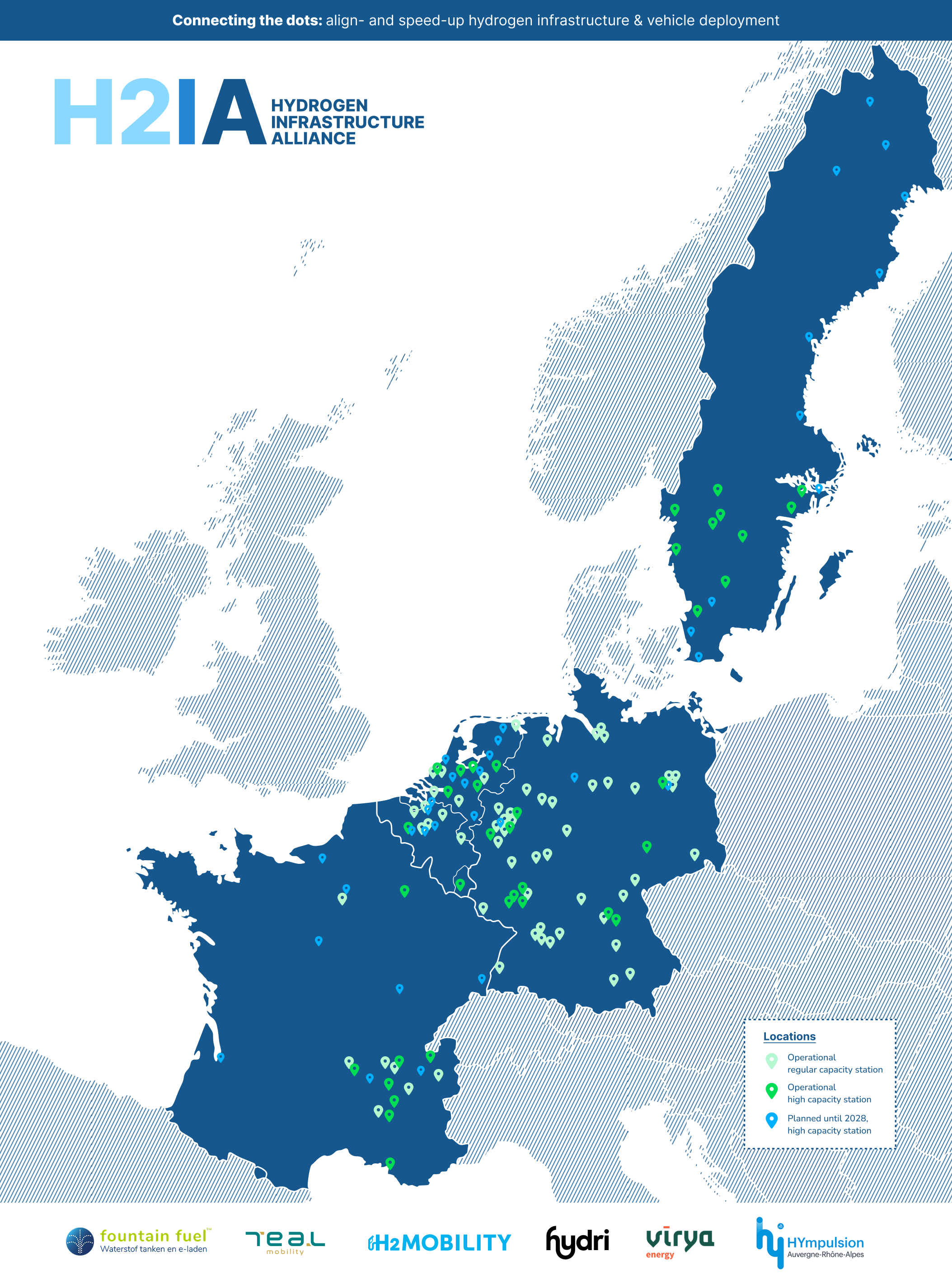 The Hydrogen Infrastructure Alliance
The Hydrogen Infrastructure Alliance (H2IA) is a collaboration between six ambitious and leading European operators of hydrogen refuelling stations, who want to accelerate the rollout of hydrogen mobility across Europe. The alliance stresses the importance for the availability of vehicle models and the opportunity to coordinate infrastructure development with vehicle deployment. The goal is to align infrastructure and vehicle commitments by 2028.
The alliance includes prominent members from various European member states—Hydri, TEAL-Mobility, Fountain Fuel, H2 MOBILITY, Virya Energy and HYmpulsion. These companies jointly operate over 90 hydrogen refuelling stations (HRS) for light- and heavy-duty fleets, with 39 more large-scale stations planned which will be enough to refuel over 1,800 trucks daily. The alliance has initiated conversations with leading vehicle manufacturers about accelerating hydrogen mobility.
Through its “Connecting the Dots” strategy, H2IA is engaging with vehicle manufacturers and other market stakeholders to translate hydrogen truck deployment plans into concrete opportunities around existing and planned refuelling infrastructure. The ambition is to help create an increasingly connected European network in which hydrogen trucks can operate across regions and borders with reliable access to refuelling infrastructure.
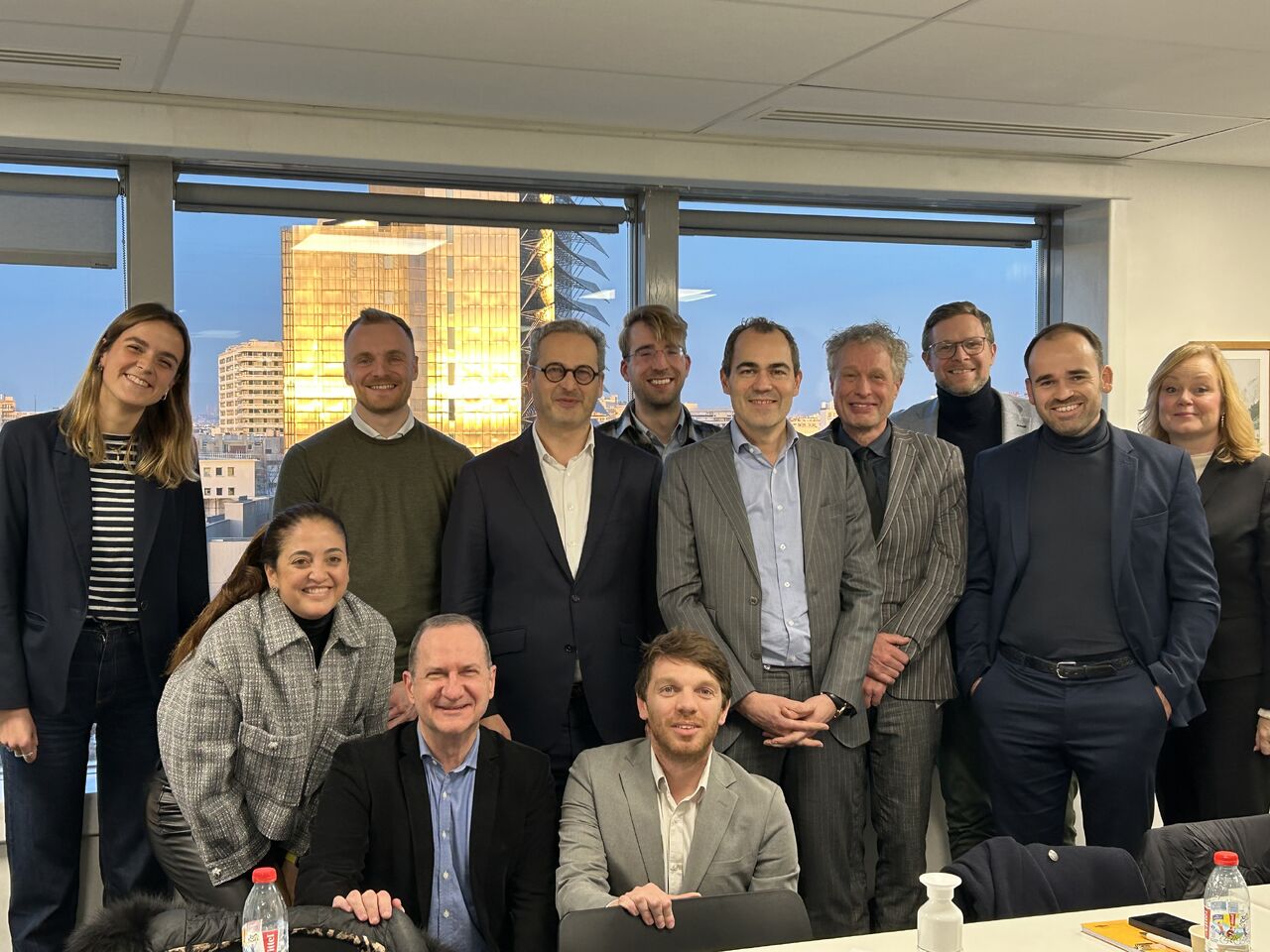
Watch introduction and member-vision statements on YouTube.
Media contact Germany:
Daniela Dietz, Head of Communications, H2 MOBILITY
presse@h2-mobility.de